
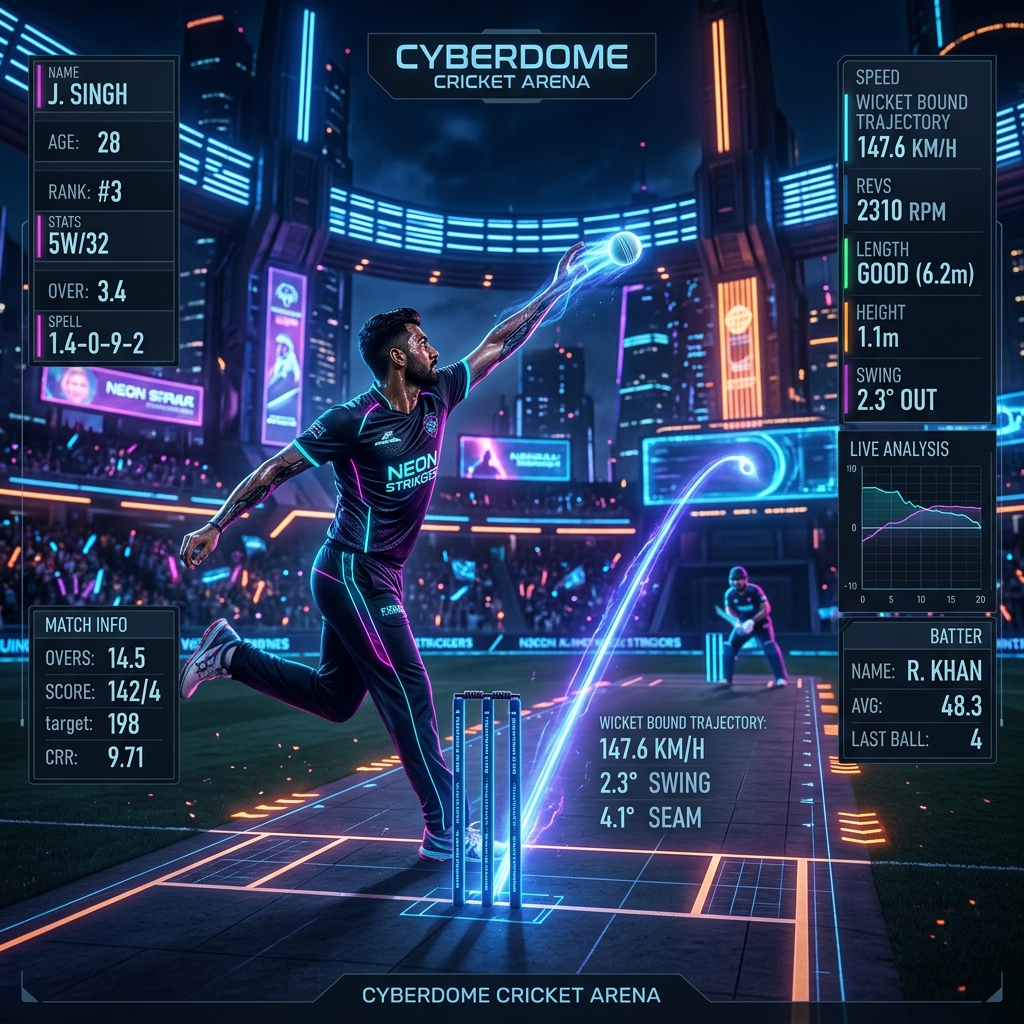
A bowler takes 1/40 in their 4 overs, while another takes 0/20. Who bowled better? Traditional stats might reward the first bowler for the wicket, but advanced analysis favors the second for building immense pressure. To solve this discrepancy, we developed the Bowling Pressure Index (BPI).
The Deficit of Traditional Bowling Stats
Wickets are highly volatile and often depend on luck, drop catches, or batsman error. Conversely, Economy Rate (ER) can be skewed by a single bad over or defensive fields. Neither stat captures the bowler's ability to consistently restrict runs and force errors over a spell. BPI fills this gap by evaluating the quality of every single delivery.
How BPI is Calculated
CricRover's BPI is calculated on a 0 to 100 scale using a proprietary, context-aware algorithm integrating three core metrics:
- Dot Ball Consistency: Dot balls are the currency of pressure. Consistently bowling dot balls starves the batsman of strike and forces them into high-risk shots.
- Boundary Suppression: Evaluates how well a bowler prevents release boundaries. Conceding back-to-back boundaries instantly releases pressure.
- Situational Leverage: A dot ball bowled when the opposition needs 6 runs off the final over is weighted much higher than one in a low-stakes scenario.
What the Scores Mean
- BPI > 75 (Elite): A masterclass spell. Choking the run rate, offering zero easy singles, and consistently beating the bat.
- BPI 50 - 75 (Very Good): Strong control, building pressure and keeping the batting team under wraps.
- BPI < 35 (Subpar): Erratic line and length, conceding frequent boundaries, and releasing pressure.
BPI in Action
During elite bowling spells, BPI regularly hovers above 80. Even in games where wickets don't fall, BPI reveals the true impact: the extreme pressure built at one end directly results in wickets falling at the other end for bowling partners. BPI finally gives these silent match-winners the recognition they deserve.