
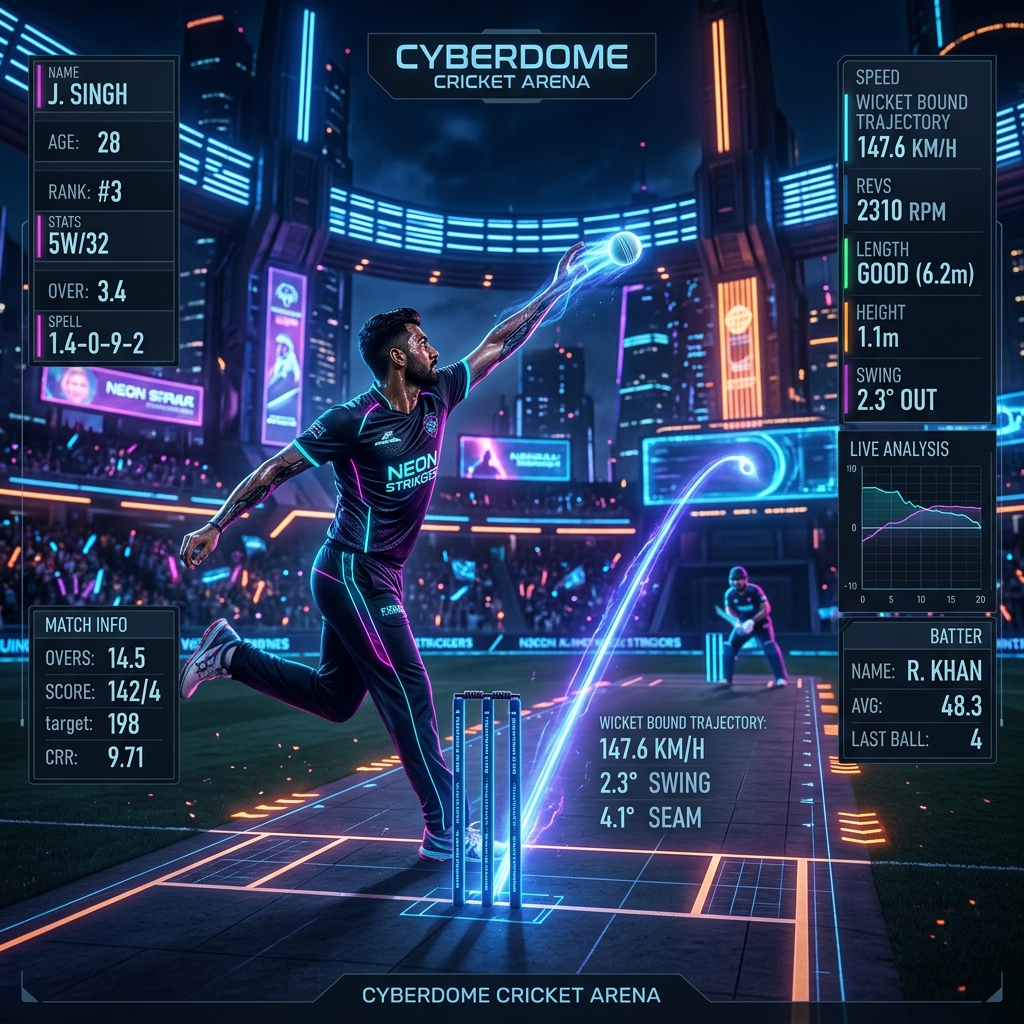
A bowler who takes 3 wickets but concedes 60 runs in 8 overs is very different from one who takes 3 wickets conceding just 22 runs. Yet traditional stats treat both as "3-wicket hauls." CricRover's Bowling Pressure Index (BPI) separates elite bowling from fortunate wickets.
What is BPI?
BPI scores a bowling spell on a scale of 0–99. It combines dot ball percentage, economy rate, wickets taken, and maiden overs into a single pressure score that reflects how much control a bowler exerted during their spell.
The Four Components of BPI
BPI vs Traditional Bowling Averages
Traditional bowling averages (runs per wicket) can be misleading. A bowler who dismisses lower-order batsmen cheaply can have a great average while being ineffective against top-order batters. BPI focuses on the process — was the bowler in control? — rather than just the outcomes.
🎯 Find BPI on Every CricRover Match Report
Every CricRover match report shows the BPI score for the top bowler of each innings. Look for the cyan badge labelled BPI in the bowling analysis section. BPI scores above 70 indicate a genuinely dominant bowling spell.
BPI is a CricRover proprietary metric. Values are capped at 99 to prevent outlier inflation. Methodology subject to ongoing refinement.