
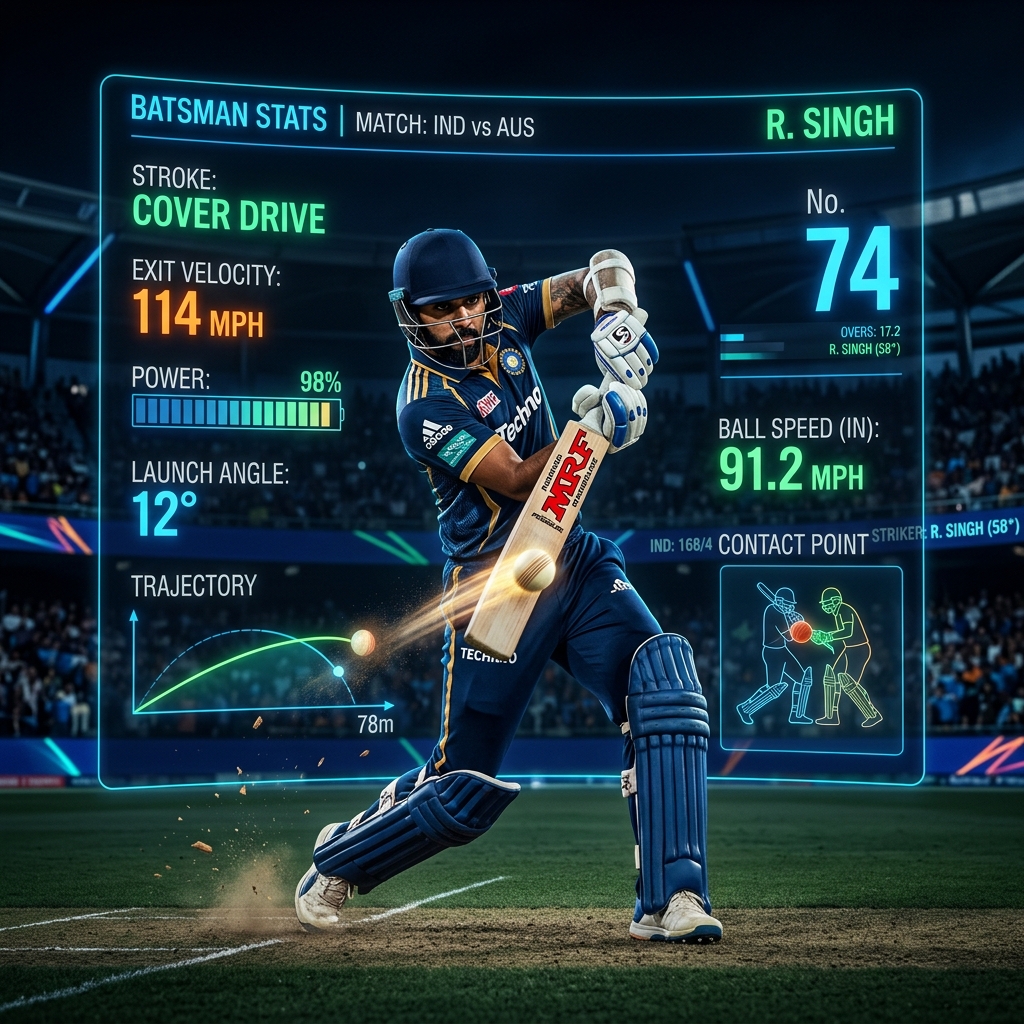
Traditional cricket statistics tell you what happened — how many runs, how many balls. CricRover's Contextual Batting Index (CBI) tells you how important it was. A 50 chasing 160 in a T20 is very different from a 50 made when the game is already won. CBI quantifies that difference.
What is CBI?
The Contextual Batting Index is a proprietary CricRover metric that scores a batting innings on a scale of 0–200, where 100 represents a perfectly adequate innings relative to match context, scores above 100 indicate exceptional impact, and scores below 100 indicate underperformance given the situation.
How CBI is Calculated
CBI combines four key components:
CBI in Practice — Real Examples
| Scenario | Stats | CBI | Verdict |
|---|---|---|---|
| T20 chase, needed 160+ | 72(38) SR:189 | 168 | Match-winning |
| T20, game already won | 50(32) SR:156 | 78 | Good, low context |
| ODI batting first | 95(110) SR:86 | 112 | Solid anchor |
| Test, must save game | 110(220) SR:50 | 131 | Classic rearguard |
Why CBI Matters for Cricket Analysis
Standard averages and strike rates fail to capture match context. A player can average 45 in T20Is but consistently score at times when the game is already settled. CBI exposes this by weighting every innings against what was actually needed at that moment.
CricRover uses CBI to rank the Top Performers of the Week every Sunday, ensuring that the rankings reward genuine match impact — not just raw statistics.
📊 Find CBI on Every CricRover Match Report
Every match report on CricRover shows the CBI score for the top batter of each innings. Look for the amber badge labelled CBI alongside the batting highlights section. Higher CBI = more contextually impactful innings.
CBI is a CricRover proprietary metric. Methodology updated periodically to reflect evolving match formats and scoring patterns.