
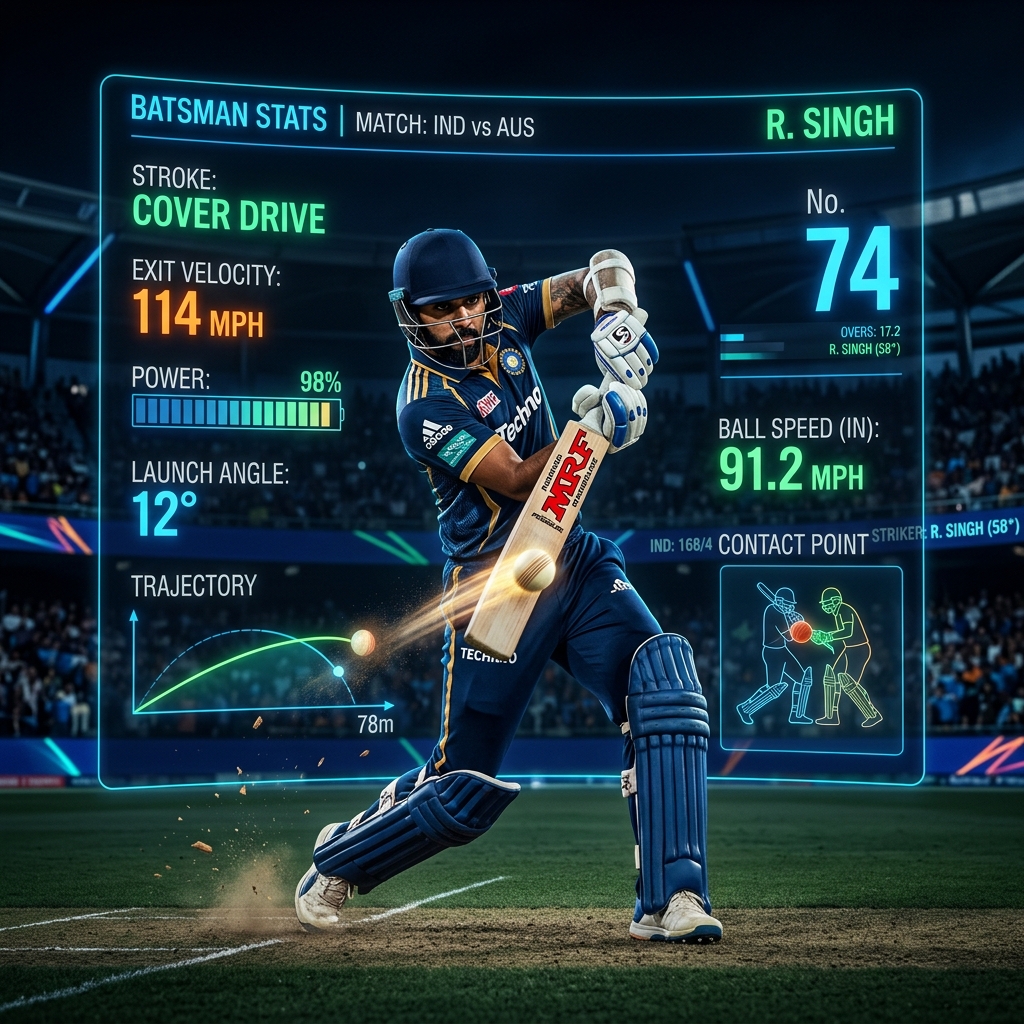
In modern cricket analysis, evaluating a batsman solely on average and strike rate is outdated. A strike rate of 130 during a comfortable run chase is not the same as a strike rate of 130 when chasing 12 runs an over. CricRover's Contextual Batting Index (CBI) introduces context into batting performance evaluation.
The Flaw of Raw Averages
Traditional batting statistics treat every run identically. A single when your team is 100/1 is counted the same as a single when your team is 40/4 in a tricky green-top chase. CBI measures a batsman's efficiency relative to the expected outcome of the specific situation they walk into.
How CBI is Calculated
- Match Phase: Runs scored in the Powerplay, Middle Overs, and Death Overs have different expectations and risk profiles.
- Required Run Rate (RRR): Scoring at 8 RRR when 12 is required is negative contribution; doing so when 6 is required is highly positive.
- Wickets in Hand: When a team is 8 wickets down, the risk of getting out is extreme. Runs in these high-stakes situations are heavily rewarded.
CBI Score Classifications
- CBI > 150 (Outstanding): The batsman outperformed situational expectations massively.
- CBI 100 (Par): Performed exactly as expected for that situation.
- CBI < 75 (Subpar): Consumed valuable deliveries without matching the required run rate, increasing pressure on partners.
Why CBI Matters
CBI helps teams identify "clutch" players who may not have the highest raw averages but consistently deliver when it matters most. In modern franchise leagues, CBI is the ultimate tool for evaluating true batting value and making informed selection decisions.