
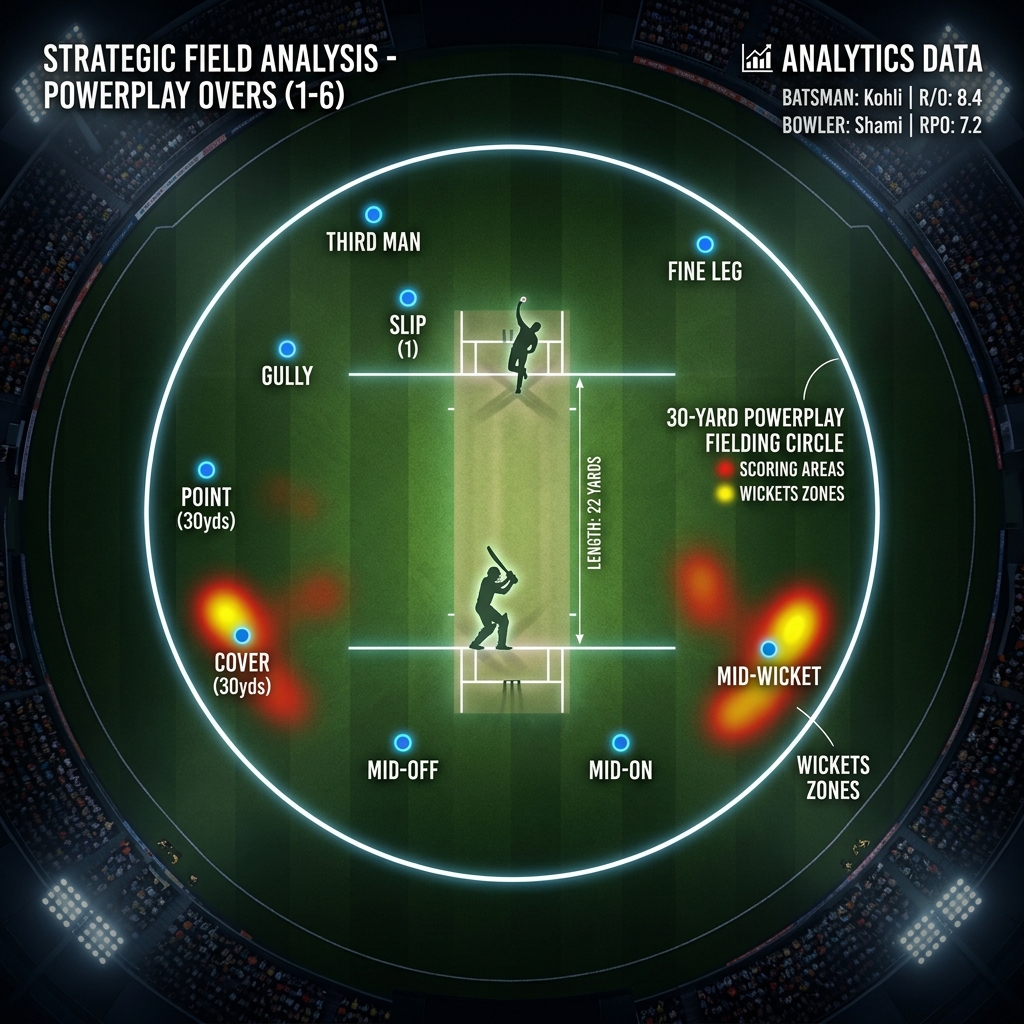
The powerplay in ODI cricket — the first 10 overs — presents every bowling captain with a fundamental strategic dilemma: should you attack with your best wicket-takers and accept some expensive overs, or should you prioritise economy and let your spinners dry up runs in the middle? BPI data across hundreds of recent ODIs reveals a clear answer.
The Wickets vs Economy Debate
Traditional cricket wisdom says "take early wickets and the runs will take care of themselves." But modern batting depth has complicated this axiom. Teams now regularly post 300+ totals despite losing 2-3 early wickets, because their middle and lower order is stacked with T20-capable hitters.
BPI analysis adds nuance: a powerplay over that takes 0 wickets but costs only 3 runs (BPI: 72) is actually more valuable than an over that takes 1 wicket but costs 10 runs (BPI: 58). The 3-run wicket-less over restricts the batting team's launch trajectory more effectively than the expensive wicket.
When to Attack, When to Restrict
- Attack when: The pitch has early pace and bounce, the batting team's tail is weak, or you have a death bowling specialist who needs overs saved for later.
- Restrict when: The batting team has 7 capable batsmen, the pitch is flat, or you're defending a low total where every run is precious.
The Optimal Powerplay BPI Target
Statistical analysis of ODI matches where the bowling team won shows an average collective powerplay BPI of 63 or above. Teams that achieve a powerplay BPI below 50 lose 73% of matches regardless of middle-over performance. This is because a low powerplay BPI gives the batting team a scoring platform that is almost impossible to overcome later in the innings.
Applying This to Your Match Watching
Next time you watch an ODI, track the runs conceded in the first 10 overs relative to wickets taken. If the batting team is scoring at 6+ per over in the powerplay without losing wickets, the bowling team's BPI is likely below 50 — a critical warning sign. CricRover's live BPI tracking makes this analysis available in real-time on every match dashboard.